
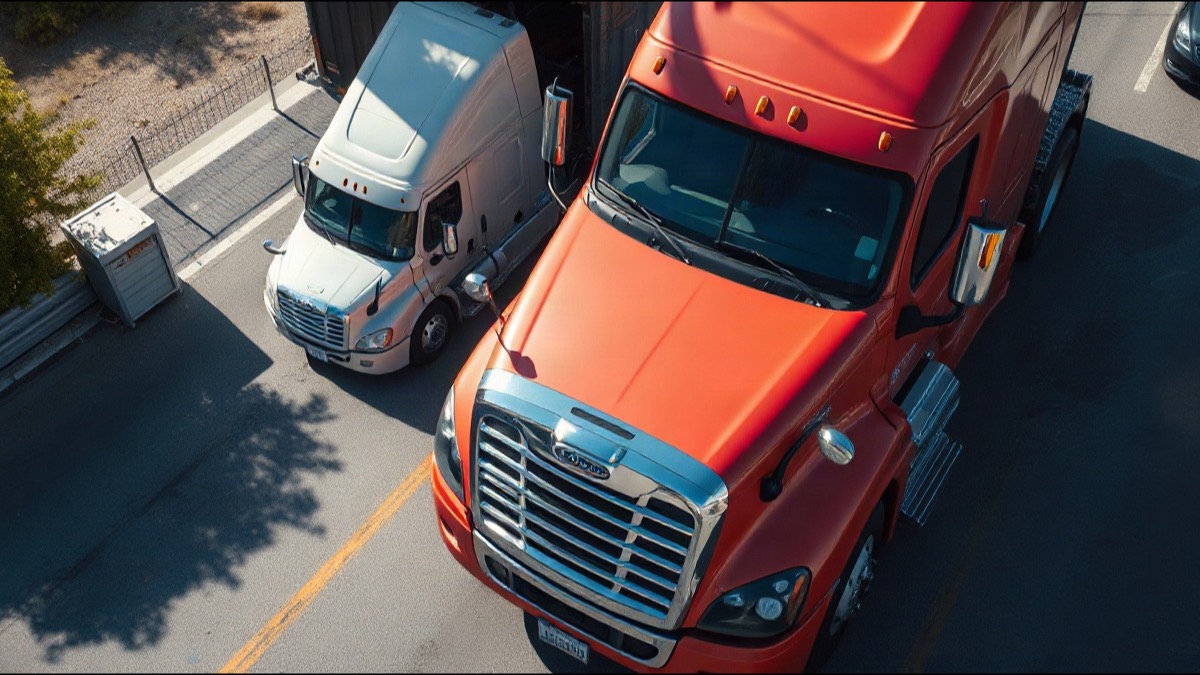
Whether you run under your own MC authority or are leased to a carrier, trucking insurance for a Modesto-area owner-operator is not optional and the requirements go well beyond what most drivers expect. The FMCSA floor rarely matches what freight brokers on Highway 99 and I-5 actually require on the certificate. Before you accept a new lease agreement or renew your current policy, make sure your program covers the four layers every Central Valley owner-operator actually needs: primary liability, physical damage, cargo, and non-trucking liability for the miles when the carrier’s policy does not apply.
Modesto sits at the center of one of the most active freight markets in California. Stanislaus County’s agricultural processing operations, the distribution warehouses along Highway 99, the dairy and produce supply chains feeding markets throughout the state, and the short-haul and regional runs connecting Modesto to the Port of Stockton, the Ports of Oakland and Los Angeles, and the refrigerated warehousing clusters in the Central Valley make owner-operator trucking one of the dominant self-employed occupations in this region. According to the Federal Motor Carrier Safety Administration, California has more registered trucking operations than any other state, and a significant portion of those operations are single-truck owner-operators running under carrier leases or their own new authorities. Insurance City’s parent operation serves 4,500+ active customers across three California offices and wrote 2,080 new policies in 2025. We work with owner-operators and small fleets throughout Stanislaus and San Joaquin Counties and understand how the coverage structure for a leased operator differs from an owner-authority operation, and which commercial carriers in our network have real appetite for Central Valley trucking accounts.
The four coverage layers every Modesto owner-operator needs
Primary liability — the FMCSA floor is not enough
Under 49 CFR §387.9, interstate for-hire motor carriers hauling general freight in vehicles over 10,000 lbs GVWR are required to carry a minimum of $750,000 in public liability coverage, protecting third parties against bodily injury and property damage caused by the truck. Carriers hauling certain hazardous materials face federal minimums up to $5 million depending on the commodity. Most freight brokers and shippers operating on the Highway 99 and I-5 corridors out of Modesto require a certificate showing at least $1 million in liability coverage before they will tender a load, regardless of the federal floor — the $750,000 minimum is almost never sufficient to satisfy actual shipper and broker requirements in this market.
If you are leased to a carrier, the carrier’s primary liability policy may cover you while you are dispatched on a load under the carrier’s operating authority — but confirm this in writing in the lease agreement, because coverage terms vary significantly between carriers. Some leases require the owner-operator to carry their own primary liability; others provide carrier coverage for dispatched hauls but leave the operator without coverage during deadhead and repositioning miles. Know which situation applies to your lease before your policy renews.
The carrier’s insurance filing is not the same as your coverage — an owner-operator without their own policy who relies entirely on a carrier’s program can face personal financial exposure in a serious accident.
Physical damage — protecting your truck
Primary liability covers injuries and damage to other people and property. It does not pay to repair or replace your truck if you are at fault in an accident, if the truck is stolen, or if it is damaged by fire, flood, or collision with a fixed object. Physical damage coverage — split between collision (at-fault accidents) and comprehensive (theft, weather, vandalism, fire) — is what protects the truck itself. If your truck is financed, the lender will require physical damage coverage as a condition of the loan. If you own the truck free and clear, the decision to carry physical damage is yours, but replacing a Class 8 semi in today’s market without insurance coverage means absorbing a six-figure loss out of pocket.
Physical damage coverage is written at an agreed or stated value. Work with your broker to set a value that reflects what the truck is actually worth in the current market, not the original purchase price or a depreciated book value that would leave you underinsured after a total loss.
Motor truck cargo — you are responsible for what you haul
Cargo insurance covers the freight you are transporting against loss or damage while in your custody — theft, collision damage to the load, fire, and certain weather events depending on the policy form. Most freight broker contracts in the Central Valley require owner-operators to carry their own motor truck cargo policy with a minimum limit of $100,000 before loads are tendered. Review the insurance requirements section of your broker agreements carefully before accepting loads without your own coverage in place.
The carrier you are leased to may carry contingent cargo coverage, but contingent cargo pays only after a primary cargo claim is denied — meaning it provides limited practical protection for most losses. Do not treat the carrier’s contingent policy as a substitute for your own cargo coverage. Specific commodity exclusions also matter: refrigerated cargo, electronics, alcohol, and certain high-value freight have exclusions or require endorsements that a standard cargo policy does not automatically provide. Confirm with your broker that the commodities you actually haul are covered under the specific cargo form, not assumed covered.
Non-trucking liability — the gap between dispatches
When you are driving your truck for personal use, repositioning between loads, or operating off-dispatch and not under a carrier’s operating authority, you are in a coverage gap. The carrier’s primary liability policy does not apply to off-dispatch miles. Your own primary commercial auto policy — if you run your own authority — may or may not cover personal use depending on the policy form. Non-trucking liability (also called bobtail insurance) fills this gap by covering the truck during personal use and time between dispatches at a significantly lower premium than a full primary liability policy, because it excludes the higher-risk dispatched-haul exposures.
If you are leased to a carrier and the carrier provides primary liability for dispatched hauls, non-trucking liability is typically the coverage structure your broker will recommend to complete the program. If you run under your own authority, discuss with your broker whether a primary commercial auto policy already addresses off-dispatch use, or whether a separate non-trucking endorsement is needed.
Workers’ compensation for Modesto trucking operations
As a sole proprietor owner-operator with no employees, you are generally exempt from California’s mandatory workers’ compensation requirement under Labor Code §3700. The moment you hire another driver — even a part-time or occasional substitute driver — workers’ compensation becomes mandatory with no grace period. Some carriers and freight brokers also require proof of workers’ comp or an owner-exclusion waiver before dispatching loads to you, regardless of your employee count. Verify the requirements in your specific lease and broker agreements before you accept loads.
New authority vs. leased: why it matters for your insurance
Owner-operators running under their own MC authority carry a fundamentally different risk profile than those leased to a carrier. A new authority — typically defined as an operating authority granted within the past two years — is considered a significantly higher risk by commercial trucking carriers. Fewer insurers will quote new-authority operations, and those who do will price the coverage substantially higher than they would for an established operation with two or more years of clean operating history under the same authority. If you are applying for your own MC authority in the Modesto area, budget for materially higher premiums in the first two years and work with a broker who has access to insurers with genuine appetite for new-authority accounts in California’s agricultural and freight corridors.
Leased operators benefit from the carrier’s established insurance history and the carrier’s filed MCS-90 endorsement, which satisfies FMCSA’s financial responsibility filing requirement. The trade-off is reduced control over your coverage terms and the ongoing obligation to understand exactly what the carrier’s program covers versus what falls to you as the operator.
What trucking insurance costs for a Modesto owner-operator
Working ranges for a Modesto-area owner-operator with a single semi-truck depend on CDL tenure, driving record, commodity hauled, operating radius, and authority type. As general reference ranges:
- Primary liability: $8,000–$18,000 per year for a single-truck operation; new authorities, drivers with violations, and high-risk commodity hauls will be toward the upper end of this range or above it
- Physical damage: $3,000–$8,000 per year depending on the agreed value of the truck and the deductible selected; older trucks with lower agreed values will cost less
- Motor truck cargo: $1,500–$4,000 per year for a standard $100,000 limit on general freight; refrigerated or high-value commodity hauls will run higher
- Non-trucking liability: $600–$1,500 per year as a complement to a carrier-provided primary liability program
These are working ranges, not quotes. Your actual premium depends on your specific operation, driving record, claims history, the commodities you haul, and the commercial trucking carriers an independent agent can access for your account.
Why a local independent broker matters for Modesto truckers
A national call center does not understand that the agriculture-heavy freight lanes out of Stanislaus County carry different underwriting profiles than dry-van general freight, that a new MC authority issued in Modesto six months ago faces a materially different carrier market than a five-year-old established operation, that your specific lease agreement determines whether you need your own primary liability or only non-trucking and cargo coverage, or that a broker who works with multiple commercial trucking carriers can place your account where it belongs instead of forcing it into a program designed for a different risk profile. An independent broker who works with Central Valley owner-operators also understands which carriers in the market have current appetite for California agricultural-region trucking accounts and which ones have pulled back from new California authority in the past 18 months.
Insurance City serves Modesto trucking operations from our Stockton office at 956 W. Robinhood Drive — call (209) 670-1556 to speak with an agent about your owner-operator coverage. Most commercial trucking policies are quoted and bound without an office visit. Serving Stanislaus County from Stockton by phone.
Frequently asked questions
What is the minimum liability coverage a trucking owner-operator needs in California?
Under 49 CFR §387.9, the federal minimum for interstate general freight carriers is $750,000 in public liability. Most freight brokers and shippers on Highway 99 and I-5 require at least $1 million on the certificate before tendering a load. Owner-operators leased to a carrier should confirm in writing whether the carrier’s primary liability policy covers them while dispatched, because the answer varies by carrier and lease agreement. Running under your own MC authority means you are responsible for your own financial responsibility filing with FMCSA via the MCS-90 endorsement on your policy.
What is non-trucking liability and does a Modesto owner-operator need it?
Non-trucking liability (bobtail insurance) covers your truck during personal use and between dispatches when you are not under a motor carrier’s operating authority. The carrier’s primary liability policy covers you only while dispatched on a load — any time you are driving for personal errands, repositioning between loads, or operating off-dispatch, you are not covered by the carrier’s program. If you are leased to a carrier that provides primary liability while dispatched, you almost certainly need non-trucking liability to cover the time when the carrier’s policy does not apply.
Do Modesto owner-operators need their own cargo insurance?
Almost always yes. Freight broker contracts in the Central Valley typically require owner-operators to carry their own motor truck cargo policy with a minimum of $100,000 in coverage before loads are tendered. The carrier’s contingent cargo coverage pays only after a primary cargo claim is denied, which means it provides little real protection for most losses. Confirm that your specific commodity is covered under the cargo form — certain freight types require endorsements that a standard cargo policy does not automatically include.
How much does trucking insurance cost for an owner-operator in Modesto?
Working ranges: primary liability $8,000–$18,000 per year; physical damage $3,000–$8,000 per year; cargo insurance $1,500–$4,000 per year for a $100,000 limit; non-trucking liability $600–$1,500 per year. New authorities, drivers with violations, and high-risk commodity hauls will be toward the upper end of these ranges or above them. These are estimates, not quotes. Your actual premium depends on your driving record, claims history, operating radius, and the commercial carriers your broker can access for your account.
Related reading: Trucking and Owner-Operator Insurance in Stockton, CA — Box Truck and Delivery Driver Insurance in Sacramento, CA — Lee esta guía en español
Insurance City Agency — 956 W. Robinhood Drive, Stockton, CA 95207 — (209) 670-1556. Serving Modesto and Stanislaus County trucking operations by phone from our Stockton office. Most commercial policies are quoted and bound without an office visit. CA License #6003045. Reviewed by Santo Militello, California-licensed agent and owner (CA Lic. #1737723). Our licensed team brings more than 70 years of combined insurance experience.
More guides from Insurance City
- Does Landlord Insurance Cover Unpaid Rent in California?
- How Much Does Workers' Comp Insurance Cost in California? Cost Factors by Industry
- Landlord Liability Insurance in California: A Tenant Is Hurt
- Auto Repair Shop Insurance in Tracy, CA: Garage Liability, Garagekeepers & SJVAPCD Rules
- See all articles →
Insurance City in Stockton: Stockton auto insurance · homeowners insurance in Stockton · renters insurance · landlord insurance · life insurance in Stockton · business insurance in Stockton
Ready for a quote? Call, walk in, or send the form
Call (209) 670-1556 Request a Quote
956 W Robinhood Dr, Stockton · Mon–Fri 10am–6pm · Walk-ins welcome · Se habla español · ITIN accepted. Insurance City Agency, LLC · CA License #6003045.