
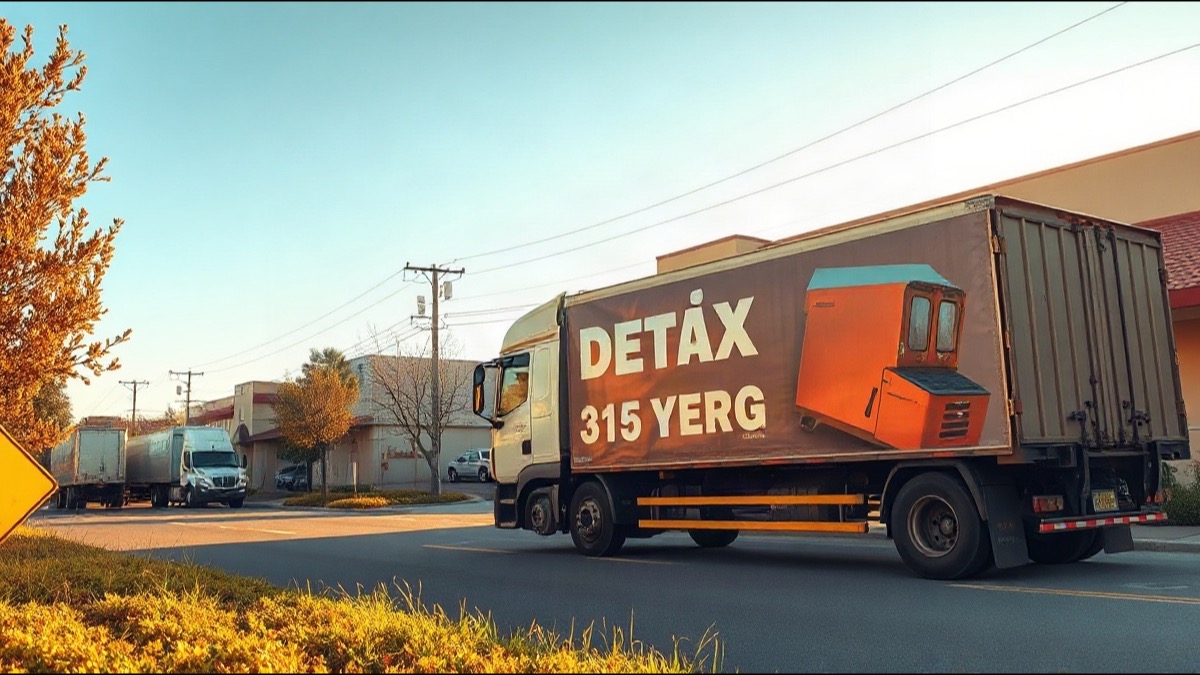
Your delivery contract starts this week. Your box truck is ready. The one thing standing between you and your first route is a commercial auto policy that actually covers a vehicle used commercially — because a personal auto policy will not, and the denial happens at claim time when it is too late to fix it. Stockton box truck delivery operators need commercial auto, cargo insurance, general liability, and workers’ compensation. Here is exactly what each coverage does, what California and federal regulations require, and what you can expect to pay.
Stockton sits at the convergence of I-5, Highway 99, and Highway 4 — one of the most active freight corridors in the Central Valley — and is home to the Port of Stockton, California’s only inland seaport. That geography drives a dense ecosystem of last-mile delivery, regional distribution, and agricultural freight operations. According to the Federal Motor Carrier Safety Administration (FMCSA), commercial truck crashes resulted in 168,320 injury crashes in the most recent national data year, which is why commercial coverage — structured for vehicles in commercial use — is the only appropriate tool for this risk. Insurance City’s parent operation serves 4,500+ active customers across three California offices and wrote 2,080 new policies in 2025. The quote you get is the number you pay — no adjustments when it’s time to bind.
The coverage every Stockton box truck delivery business needs
Commercial auto — the foundation that personal auto cannot replace
A commercial auto policy covers liability for bodily injury and property damage you cause to other people and their vehicles, plus physical damage to your truck if you add collision and comprehensive coverage. Personal auto policies explicitly exclude vehicles used for commercial purposes — and the exclusion holds regardless of truck size. A small box truck on a delivery run for hire is a commercial vehicle. If a personal carrier discovers the vehicle was operating commercially at the time of a claim, the claim is denied and you are personally responsible for the other driver’s repairs, medical costs, and any lawsuit.
Commercial auto limits for box truck delivery operations in Stockton typically start at $1 million combined single limit (CSL) for liability — the same floor required by most warehouse clients and logistics platforms as a condition of issuing delivery contracts. If your truck exceeds 26,000 lbs GVWR, it falls into CDL territory and the commercial auto program needs to reflect that vehicle class. Discuss your truck’s GVWR with your broker before the policy is written; it affects classification, rate, and coverage structure.
Named driver and permissive user provisions also matter if you run multiple drivers. Some commercial auto programs restrict coverage to listed drivers only, leaving you exposed when a substitute driver takes the wheel. Know your policy’s driver requirements before someone else gets behind the wheel of your truck.
Motor truck cargo insurance — the coverage your clients require and commercial auto skips
Your commercial auto policy covers the truck. It does not cover what is inside it. Motor truck cargo insurance covers goods you are transporting if they are lost, stolen, or damaged in transit. Electronics stolen overnight from your truck in a Stockton distribution center parking lot. A client’s produce shipment damaged when a load shifts on Highway 99. A full pallet lost in transit. These are cargo claims, and commercial auto will not respond to any of them.
Most retail clients, third-party logistics companies, and delivery platform contracts in the Stockton area require motor truck cargo coverage — typically $50,000 to $100,000 in limits — before they add you to an approved carrier list. Review your delivery contracts for cargo requirements before the policy is bound. A missing cargo requirement discovered after a loss is an expensive gap to learn about.
Cargo policies differ significantly in what they exclude. Agricultural produce, perishables, electronics, and high-value freight each carry different requirements from general freight. Be specific with your broker about what you regularly haul so the policy actually responds to your cargo — not a generic category description that leaves your actual loads exposed.
FMCSA registration and interstate compliance
Under FMCSA regulations (49 CFR Part 390), any commercial motor vehicle with a GVWR over 10,001 lbs engaged in interstate commerce must have a USDOT number. Most standard box trucks fall above this threshold. Stockton’s position at the I-5 and Highway 99 junction means many delivery businesses run routes that occasionally cross into Nevada or Arizona, triggering the interstate FMCSA threshold. For-hire carriers transporting regulated commodities across state lines must also obtain operating authority (an MC number) through FMCSA in addition to the USDOT number.
If your routes stay entirely within California, you are operating intrastate and FMCSA jurisdiction generally does not apply. The California Public Utilities Commission (CPUC), however, regulates intrastate for-hire motor carriers and may require a California carrier permit depending on your operation type. California Highway Patrol also conducts commercial vehicle inspections on California roads regardless of interstate status — your vehicle maintenance records, driver logs if applicable, and insurance certificates are all inspectable. A per-violation fine and an out-of-service order that shuts you down mid-route are the consequences of operating without the correct registration and insurance.
Workers’ compensation — required from day one of your first hired driver
Under California Labor Code §3700, workers’ compensation is mandatory from the moment you hire your first employee — no minimum headcount, no grace period, no exception for part-time or temporary drivers. A box truck delivery business with one hired driver owes workers’ comp from day one — operating without it means every on-the-job injury cost comes directly out of your pocket.
Delivery driving carries consistent workers’ comp exposure: loading and unloading injuries, repetitive strain from handling freight, traffic accidents during routes, and slip-and-fall incidents at delivery locations. A driver injured on a Stockton route without workers’ comp coverage creates immediate personal liability for the employer — medical costs, temporary disability payments, and potential litigation, all uninsured.
California’s AB 5 adds a layer of complexity for delivery businesses that use independent contractors. The law applies strict tests for contractor classification, and many drivers classified as 1099 workers have been reclassified as employees under California law. If your drivers qualify as employees under AB 5 — even if they signed contractor agreements — the workers’ comp obligation follows. A broker who works regularly with delivery operations understands this and can help you structure your policy around your actual workforce.
General liability — what happens off the truck
General liability covers third-party bodily injury and property damage arising from your business operations that is not related to vehicle operation. A delivery driver drops a heavy package and damages a client’s flooring. A hand truck scrapes a door frame at a receiving dock. A client trips over a dolly left in a walkway during unloading. These are general liability claims — not auto claims — and they come up regularly in delivery operations.
Standard general liability limits of $1 million per occurrence and $2 million aggregate are the typical starting point for Stockton delivery businesses. Warehouse clients and logistics platforms often require general liability in addition to commercial auto and cargo — you will need all three certificates to get on their approved list. A broker who moves quickly on certificates of insurance keeps you from losing a contract while the paperwork catches up to the work you are already doing.
What box truck delivery insurance costs in Stockton
Rates depend on your truck’s GVWR and age, driving records for all listed drivers, route territory, cargo type, annual revenue, and claims history. As working ranges for Stockton-area box truck delivery operations:
- Commercial auto: $3,500–$9,000 per year per truck for standard local-to-regional delivery; higher for multi-truck fleets, routes crossing state lines, or drivers with violations on record
- Motor truck cargo: $600–$2,500 per year depending on limits, cargo type, and annual hauling revenue
- General liability: $800–$2,500 per year for most delivery operations
- Workers’ compensation: Delivery driving is a moderate-to-elevated classification in California. A small operation with one or two drivers typically sees annual premiums in the $3,000–$8,000 range depending on payroll and driver classification
These are working ranges, not quotes. Your actual premium depends on the specifics of your operation and the commercial carriers our agents access for your account.
Why a local independent broker matters for box truck delivery operators
A national call center does not know that your Stockton logistics client requires a $1 million CSL commercial auto certificate and $100,000 in cargo coverage before your first load. An independent broker who works with commercial vehicle accounts can bind coverage when the contract is in hand, structure the cargo policy around what you actually haul, and produce the COIs your clients need without a multi-day wait. The Insurance City office at 956 W. Robinhood Drive in Stockton handles commercial delivery accounts directly — walk in during business hours or call (209) 670-1556. Most commercial delivery policies are quoted and bound the same day, with or without an office visit.
Frequently asked questions
Do Stockton box truck operators need a USDOT number for intrastate-only delivery routes?
If your routes stay entirely within California, FMCSA jurisdiction generally does not require a USDOT number under 49 CFR Part 390 for intrastate operations. However, intrastate for-hire carriers are still regulated by the California Public Utilities Commission, which may require a California carrier permit depending on your operation type. If your routes ever cross into Nevada or Arizona — even on a single trip — the interstate threshold kicks in and a USDOT number is required for vehicles over 10,001 lbs GVWR. Stockton’s position at the I-5 and Highway 99 junction means many operators expand into interstate territory earlier than expected. Discuss your route territory with your broker before the policy is written.
What does motor truck cargo insurance cover that commercial auto does not?
Commercial auto covers damage you cause to other vehicles and property, plus physical damage to your truck. It does not cover the goods inside your truck. Motor truck cargo insurance covers the shipment you are hauling if it is lost, stolen, or damaged in transit — stolen electronics, damaged produce, a lost pallet. Most Stockton warehouse clients and logistics platforms require cargo coverage as a condition of putting you on their approved carrier list. Review your delivery contracts for the required limits before your first haul; a missing cargo requirement discovered after a loss is an expensive way to find out it existed.
Is workers’ compensation required for box truck delivery businesses in Stockton with just one hired driver?
Yes. Under California Labor Code §3700, workers’ comp is mandatory from the moment you hire your first employee — no minimum headcount, no grace period. Sole owner-operators with no employees are not required to carry it for themselves, though many do for their own protection. California AB 5 also applies strict contractor classification tests to delivery drivers; many drivers who signed 1099 agreements qualify as employees under California law, triggering the workers’ comp obligation regardless of the contract form. Discuss your driver classification with your broker when setting up the policy.
How quickly can I get commercial coverage for my Stockton box truck delivery business?
Most standard commercial auto and cargo policies are quoted and bound the same day you contact us. Call (209) 670-1556 or walk in to 956 W. Robinhood Drive in Stockton. Have ready: your truck’s GVWR and VIN, driving history for all listed drivers, the coverage limits your delivery contracts specify, and your estimated annual hauling revenue. With those items in hand, most delivery policies bind in a single conversation — so you are covered before the first route, not scrambling after.
Related reading: Box Truck Delivery Insurance in Sacramento, CA — Trucking Owner-Operator Insurance in Modesto, CA — Auto Repair Shop Insurance in Stockton, CA — Lee esta guía en español — Commercial truck insurance for Lathrop drayage and box trucks
Insurance City Agency — 956 W. Robinhood Drive, Stockton, CA 95207 — (209) 670-1556. Commercial delivery coverage quoted and bound same day. Walk-ins welcome Mon–Fri 10am–6pm. CA License #6003045. Reviewed by Santo Militello, California-licensed agent and owner (CA Lic. #1737723). Our licensed team brings more than 70 years of combined insurance experience.
More guides from Insurance City
- Does Landlord Insurance Cover Unpaid Rent in California?
- How Much Does Workers' Comp Insurance Cost in California? Cost Factors by Industry
- Landlord Liability Insurance in California: A Tenant Is Hurt
- Auto Repair Shop Insurance in Tracy, CA: Garage Liability, Garagekeepers & SJVAPCD Rules
- See all articles →
Insurance City in Stockton: Stockton auto insurance · homeowners insurance in Stockton · renters insurance · landlord insurance · life insurance in Stockton · business insurance in Stockton
Ready for a quote? Call, walk in, or send the form
Call (209) 670-1556 Request a Quote
956 W Robinhood Dr, Stockton · Mon–Fri 10am–6pm · Walk-ins welcome · Se habla español · ITIN accepted. Insurance City Agency, LLC · CA License #6003045.