
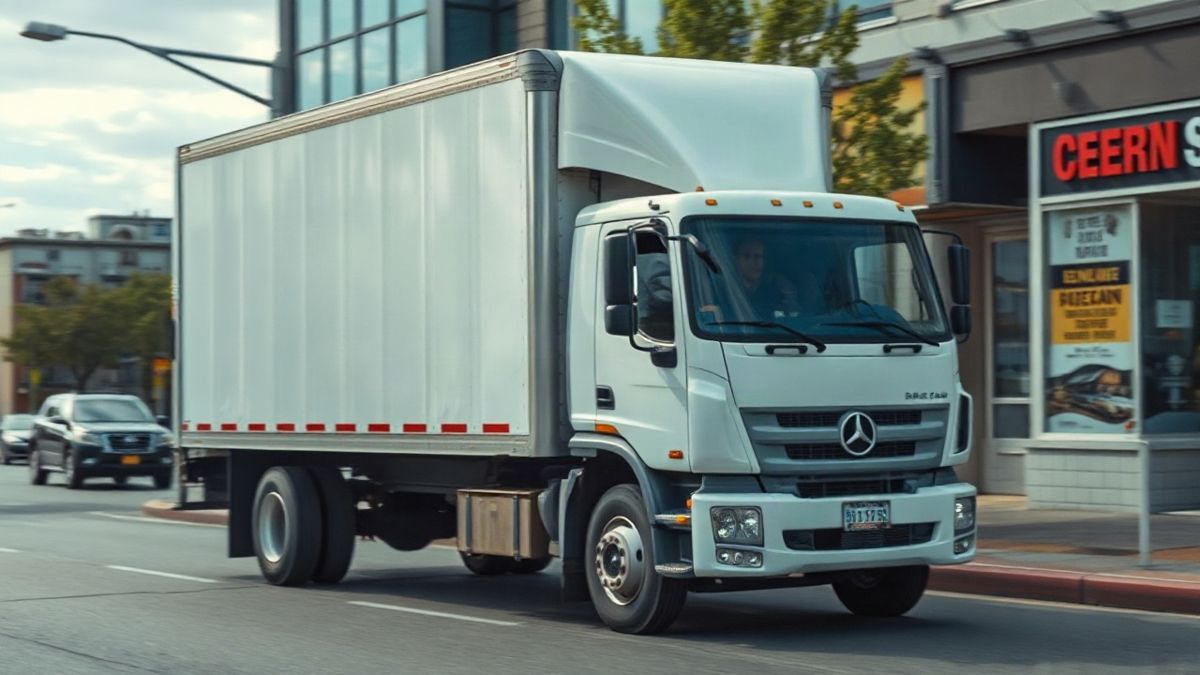
A new-authority trucking operation in California typically pays $1,700 to $2,500 per month for a full interstate coverage package, or $1,300 to $2,000 per month if it runs intrastate only. That first-year number is high because the policy is priced against no operating history at all — not against you as a driver — and it is the most expensive year most owner-operators will ever have.
That monthly figure covers a package, not a single policy, and where you land inside the range comes down to radius, commodity, unit value, and driver history.
What does a first-year authority actually pay in California?
First-year pricing runs $1,700 to $2,500 per month for a full interstate package and $1,300 to $2,000 per month for intrastate-only operation. Those ranges assume one power unit, one qualified driver, and general freight — not hazmat, not autos on a car carrier, not high-theft commodities.
What sits inside that package:
- Primary auto liability — the coverage your federal filing is written on.
- Motor truck cargo — commonly a $100,000 limit for general freight, with a $1,000 to $2,500 per-loss deductible.
- Physical damage — collision and comprehensive on the tractor and owned trailer, rated on stated value.
- Trailer interchange — for trailers you pull under an interchange agreement.
- Non-trucking liability — coverage while the truck is off dispatch.
One thing moves the monthly draft without touching coverage: the down payment. More at inception lowers the financed balance and the monthly payment, but not the annual premium.
Why does first-year authority insurance cost so much?
Because an underwriter with no loss history to rate has to price the unknown, and the unknown is expensive. A brand-new authority has no verifiable years in business, no inspection pattern, and no claims record of its own, so the rate is built off industry-wide new-venture loss experience rather than off anything specific to you.
Regulatory status compounds it. A newly registered interstate carrier holds new-entrant status with FMCSA and is subject to a safety audit within the first 12 months of operation. Until that audit clears and roadside inspections start accumulating, an underwriter is looking at a file with no evidence in it. Layer on a decade of severity trends in commercial auto — larger verdicts, higher repair costs, higher medical costs — and the first-year surcharge is the market pricing risk it genuinely cannot see yet.
In year one you are not paying for your driving record — you are paying for the absence of one.
That framing matters: the surcharge is a curve, not a plateau. Every clean month you operate is evidence the next underwriter can use.
What factors do underwriters actually rate?
Six inputs drive most of the spread inside those ranges: radius of operation, commodity hauled, driving record, truck age and value, prior authority history, and years of CDL experience. Almost everything else on the application is confirmation.
- Radius of operation — a 100-mile local radius and a 48-state long-haul profile are different risks entirely, and radius is usually the first question on the application.
- Commodity — dry freight and refrigerated produce sit mid-range. Autos, hazmat, alcohol, tobacco, and electronics sit high because theft frequency and loss severity both climb.
- Driving record — the MVR on every listed driver. Speeding in a commercial vehicle, a pattern of log violations, or a chargeable accident inside three years moves the rate hard.
- Truck age and value — stated value drives physical damage directly, and older high-mileage units draw maintenance scrutiny.
- Prior authority history — a revoked, lapsed, or reinstated authority follows the DOT number, and so does a gap in prior insurance. Disclose it up front; it surfaces anyway.
- CDL experience — three years of verifiable Class A experience is a common threshold. Under one year narrows the market sharply.
How much does the price drop at renewal?
Rates typically drop 20% to 40% after 12 to 24 months of clean operation. It is the largest reduction most trucking operations ever see, and it is earned through operating history, not negotiated.
"Clean" has a specific meaning to an underwriter:
- No chargeable accidents inside the experience period.
- No coverage lapses — one cancellation for non-payment resets the clock and puts your filings at risk.
- Stable inspections — clean roadside results are evidence; out-of-service violations are the opposite.
- Consistent operation — the same radius and commodity you were underwritten on, not a quiet drift into longer lanes.
The lapse item does the most damage. A cancellation notice goes to FMCSA, your authority can go inactive, and rebuilding costs more than the payment you missed. If cash flow is tight, restructure the payment plan before the policy cancels.
Interstate vs. intrastate: how big is the cost difference?
Intrastate-only operation typically prices at $1,300 to $2,000 per month against $1,700 to $2,500 for interstate, because the filing requirement and the exposure profile are both different. Under 49 CFR §387.9, a for-hire motor carrier hauling non-hazardous general freight in interstate commerce must maintain at least $750,000 in public liability coverage, evidenced to FMCSA on a BMC-91 or BMC-91X filing with an MCS-90 endorsement attached to the policy.
California intrastate carriers of property operate under a Motor Carrier Permit administered by the California DMV, with evidence of insurance filed to the state rather than to FMCSA. Neither we nor any broker influences DMV or FMCSA decisions, timelines, or fees — our role is to place the coverage and transmit the filing your permit or authority requires.
Intrastate-only tends to make sense for dedicated regional lanes, Central Valley agricultural hauling, port drayage out of Oakland or Stockton, and construction work that never crosses a state line. It also works as a starting posture: run California-only the first year at the lower rate, build history, then add interstate authority once your record is doing some of the pricing work for you. One caveat — most brokers and shippers contractually require a $1,000,000 combined single limit, well above the federal floor, so the higher limit is often commercial rather than regulatory.
Insurance City is at 956 W. Robinhood Drive, Stockton, CA 95207, and most commercial trucking policies are quoted and bound by phone. Call (209) 670-1556 with your DOT number, driver list, unit VINs, and stated values ready, and we will market the risk to our commercial carriers and explain what each layer does before you sign. There are no broker fees on standard policies. Insurance City’s parent operation serves 4,500+ active customers across three California offices and wrote 2,080 new policies in 2025.
Frequently asked questions
How much does new-authority trucking insurance cost in California?
First-year pricing typically runs $1,700 to $2,500 per month for a full interstate package and $1,300 to $2,000 per month intrastate-only, assuming one unit, one qualified driver, and general freight. Radius, commodity, driving record, and truck value move you within that range.
Why is the first year of trucking insurance so expensive?
Because it is priced against no operating history. A new authority has no claims record, no inspection pattern, and new-entrant status with FMCSA, including a safety audit within the first 12 months of operation, so the rate comes from industry loss experience.
When does trucking insurance get cheaper after getting authority?
Rates typically drop 20% to 40% after 12 to 24 months of clean operation: no chargeable accidents, no coverage lapses, stable roadside inspections, and the same radius and commodity you were underwritten on.
Is $750,000 in liability coverage enough for a California trucking operation?
$750,000 is the federal minimum under 49 CFR §387.9 for interstate for-hire carriers hauling non-hazardous general freight. In practice most brokers and shippers require a $1,000,000 combined single limit by contract, so who you haul for usually sets the limit.
Related reading:
- New authority trucking insurance in California
- FMCSA liability requirements: $750K vs. $1M, MCS-90 and BMC-91
- How much commercial truck insurance costs in California
- Owner-operator trucking insurance in Stockton, CA
Insurance City Agency — 956 W. Robinhood Drive, Stockton, CA 95207 — (209) 670-1556. CA License #6003045. Reviewed by Santo Militello, California-licensed agent and owner (CA Lic. #1737723). Our licensed team brings more than 70 years of combined insurance experience.
More guides from Insurance City
- Professional Liability (E&O) Insurance in California: Who Needs It, What It Costs & How It Differs from GL
- California Daycare Insurance Requirements (Title 22): State Minimums & Homeowners Rules
- HNOA Insurance California: Hired & Non-Owned Auto Coverage Explained (2026)
- Electrician Business Insurance in Lodi, CA: Coverage, Costs & CSLB C-10 Requirements
- See all articles →
Ready for a quote? Call, walk in, or send the form
Call (209) 670-1556 Request a Quote
956 W Robinhood Dr, Stockton · Mon–Fri 10am–6pm · Walk-ins welcome · Se habla español · ITIN accepted. Insurance City Agency, LLC · CA License #6003045.