
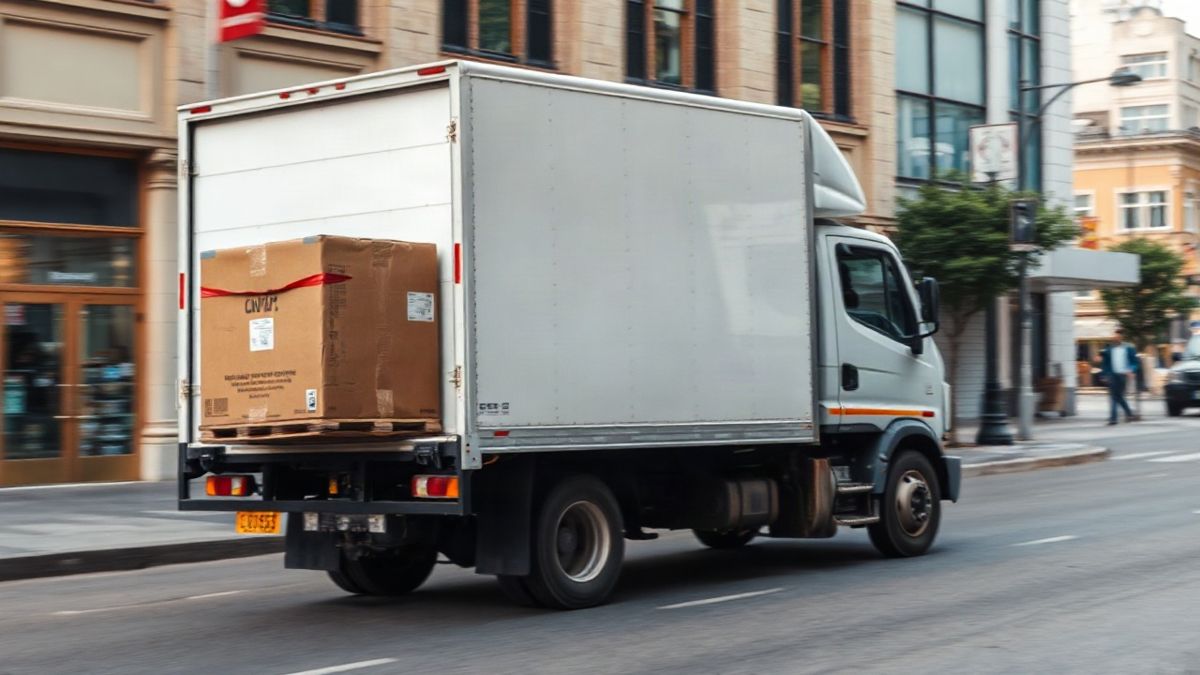
A food truck in California is permitted like a restaurant, driven like a commercial vehicle and booked like an event vendor. Each of those three roles comes with its own paperwork, and each one points to a different insurance policy. Start with the permits, because they decide what the commissary, the county and the event organizer will ask you to prove.
The permits that shape a food truck’s insurance
The county health permit. California’s Retail Food Code treats a food truck, trailer or cart as a “mobile food facility,” and your county’s environmental health department issues the permit and does the inspections. In San Joaquin County that is the Environmental Health Department at 1868 E. Hazelton Avenue in Stockton, which has separate applications for a new full-kitchen truck that has never been permitted anywhere in California and for one that was permitted before. (San Joaquin County EHD, Mobile Food Facility; EHD office) Other counties run their own programs, so permit where you will operate.
The commissary. Health and Safety Code §114295 says mobile food facilities must operate in conjunction with a commissary, mobile support unit or other approved facility, and must be stored at the commissary or another approved location. The main exception is a truck that stays in a fixed position at a community event where potable water and waste disposal are available. (HSC §114295) Commissary agreements commonly require a certificate of insurance naming the commissary, and the overnight storage spot is where your truck and equipment sit most hours of the week.
Food safety staffing. A food facility that handles unpackaged potentially hazardous food needs at least one owner or employee who has passed an accredited food safety certification exam, and that person cannot be the certified person for a second facility — something to plan for if you add a second truck (HSC §113947.1). Every food handler you hire must get a food handler card within 30 days of hire, and the card is good for three years (HSC §113948).
The city. Cities license trucks separately from storefronts. The City of Stockton’s business license forms, for example, include a Motor Food Wagon application packet and a Street Vendor application alongside the general business license (City of Stockton Business Licenses). Check each city where you park to sell.
Commercial auto: the policy food trucks most often get wrong
The standard general liability form excludes injury or damage arising from the ownership, maintenance or use of an auto owned or operated by you, and “use” includes loading and unloading. So a crash on the way to a festival, a customer hit when the truck shifts in a parking lot, or a passerby hurt while you unload a generator from the truck are auto claims, not GL claims. Our guide to what general liability does not cover explains that exclusion.
A personal auto policy typically excludes or limits business use, so a truck or tow vehicle used to sell food needs a commercial auto policy. Three things to get right on it:
- Schedule every unit. If your kitchen is a trailer, list both the tow vehicle and the trailer.
- Insure the build-out. Tell us what the kitchen build-out cost so the vehicle is insured for what it would take to replace it, equipment included, and ask how permanently attached equipment is treated.
- List every driver. Anyone who moves the truck between the commissary and a stop should be on the driver list.
More on the line between personal and business use: commercial vs. personal auto.
Where general liability still does the work
General liability is what answers when a customer slips at the service window, when a canopy blows into a neighboring booth, or when someone says your food made them sick. Foodborne illness claims usually fall under the policy’s products-completed operations coverage, because the injury happens after the food leaves your hands, so check that your policy includes it. Festivals, farmers markets, breweries and private events typically ask to be named as additional insured; see what a certificate of insurance is.
If you sell or serve alcohol, the standard GL’s liquor exclusion applies to you, and you will need liquor liability coverage on top. Many event organizers ask for it on the certificate.
Equipment, spoilage and the days the truck can’t roll
- Equipment not bolted to the truck — generators, canopies, portable fryers and point-of-sale gear — belongs on an equipment (inland marine) policy so it is covered at the commissary, at an event and in transit.
- Spoilage pays for food lost when refrigeration fails, and equipment breakdown pays to fix the compressor or generator that caused it.
- Lost income after a covered loss can be added; ask how it applies when the truck itself is the thing in the repair shop.
Workers’ comp for your crew
Once you pay anyone to cook, take orders or drive, California requires workers’ compensation — even with only one employee (California rule as stated by CSLB). Burns, cuts and back strains from lifting supplies are the common food-service injuries. For a short walkthrough of hiring your first worker, see our first-employee checklist.
What we need to quote a food truck
The year, make and model of the truck or trailer and tow vehicle; what the kitchen build-out cost; the commissary you use and its insurance requirements; the county where you hold your health permit; where the truck is stored overnight; the events and markets you work and what each one asks for on a certificate; whether you sell alcohol; your drivers; and your payroll. Insurance City is an independent brokerage in Stockton. Call (209) 670-1556 or read the Central Valley Business Insurance Guide.
More guides from Insurance City
- ACORD 25, 125, 126, and 140 Forms: California Commercial Insurance Application Guide
- California tax preparer bond for CTEC: what it is and how to get it
- Electrician insurance in Stockton, CA
- How Much Does Workers' Comp Insurance Cost in California?
- See all articles →
Insurance City in Stockton: Stockton auto insurance · homeowners insurance in Stockton · renters insurance · landlord insurance · life insurance in Stockton · business insurance in Stockton
Ready for a quote? Call, walk in, or send the form
Call (209) 670-1556 Request a Quote
956 W Robinhood Dr, Stockton · Mon–Fri 10am–6pm · Walk-ins welcome · Se habla español · ITIN accepted. Insurance City Agency, LLC · CA License #6003045. Reviewed by Santo Militello, California-licensed agent and owner (CA Lic. #1737723). Our licensed team brings more than 70 years of combined insurance experience.